06 November 2011

El Calafate, Argentina: Glaciers and Icebergs by Boat

Today I took a seven-hour boat trip on Lake Argentino to get to some of the glaciers that are not easily accessible by land.  There were two boats that went (which came in handy to give perspective to some of the pictures, like the one above).  Argentina's largest lake is quite impressive, with four distinct arms (all ending in glaciers), and a depth of over 700m (2100ft) in many places.  We traveled two of those arms today.

One of the first things we saw was a huge, beautiful iceberg that was a remnant of the Upsala Glacier break-off.  It was quite beautiful against the morning sky!

Another one of Upsala's break-offs.  The Upsala Glacier, which is one of the largest in Los Glaciares National Park, lost a 700m-long (2100ft-long) section of it's front in 2010.  As a result, there are many huge icebergs still floating in the Upsala Channel arm of Lake Argentino.  It's even more impressive to think that what you can see is only 10-15% of the iceberg's total size--the rest is underwater!

This is Glaciar Seca ('Dry Glacier').  It was named thus because it has been receding ever since it was first documented in the early 1900s as a result of the earth's natural warming cycle, though that process has certainly been accelerated in the past thirty years by global warming.

Some giant icebergs from the Glacier Spegazzini.  The boat in between, which is three stories tall, really gives an idea of how huge these masses of ice are!

Me in front of the huge icebergs.


Glaciar Spegazzini.  This one was my favorite, because it reminds me of a waterfall (see how the ice on the right looks like it is falling from the top of the mountain?).  Truly magnificent.

Me holding a block of ice that one of the sailors fished out from the lake, with the Spegazzini Glacier in the background.  Needless to day, it was really cold.

The Upsala Glacier from a distance.  See all that lighter blue in near the bottom of the mountains?  That's all part of the glacier.  In fact, pre-2010, the rocks you see in the foreground were also completely covered by the glacier, but when that 700m-long piece broke off and began drifting into the lake, it left the rocks behind.
The ice fields in front of the Upsala Glacier.

My last shot of the glaciers and icebergs of Patagonia!  (That one in the middle is dark because it started to melt, so instead of the rock being all spread out through the glacier, it has condensed on the top.)  It has been an amazing three days.  Now...on to the waterfalls :-)

05 November 2011

El Calafate, Argentina: Ice Trekking in Patagonia

Like yesterday, I could put up one hundred pictures of today, and it still wouldn't really capture the experience I had, but I hope that this small sample will give you a bit of an idea.  After taking the bus to Los Glaciares National Park, we began the day with two hours of free time near the Perito Moreno glacier to stretch our legs and eat lunch.  While I enjoyed it, it was very similar to yesterday, so I am going to start my photos where the main event of the day begins.  After lunch, we took the boat to the other side of the lake, and we landed in the spot above.  We then made the brief walk to the base of the glacier, where we got our cramp-ons, and then...

...we climbed Perito Moreno!  Being on moving ice, seeing all the crevices and little waterfalls, watching it fall and feeling it crack--the whole experience is really beyond words.  I think the craziest thing is that this glacier moves two meters a day in the center, so if I went back, even in six months, the trek would be completely different because the glacier is changing so fast.  It's really mind-boggling.  That being said, though everywhere I looked was a perfect picture, here are a few of my favorites.

Ice mountains.

Drinking water straight from the glacier.

The glacier, with the Andes in the background.  The Pacific Ocean is 40km away, directly behind me (and Chile is even closer).


The summit of our climb!

The Magellan Peninsula and Lake Argentino from Perito Moreno.

Just before the end of our trek, we went to the 'glacier bar', which consists of two tables set up on the glacier, where our guides proceeded to pour us each a double shot of Scottish whiskey (does that make it Scotch?) on the rocks...glacier rocks, that is :-)


Back on rock, just before getting on the boat to go home, with Perito Moreno, the Magellan Peninsula, and Lake Argentino in the background.

One of my last shots of Perito Moreno and the Andes.  The boat in the front really gives you an idea of how big the glacier is.  Exploring it for the past two days was incredible, and something I will never forget!

04 November 2011

El Calafate, Argentina: Glaciar Perito Moreno

This morning, just before eight, I began my journey from El Calafate to Los Glaciares National Park, Patagonia, Argentina.  This picture was taken at a viewing point just before we entered the park.  The bus ride was about an hour and a half each way, and I spent the six hours I wasn't on the bus I spent being awed and amazed by Argentina's most famous glacier, Perito Moreno.  Because pictures really do speak louder than words--especially in this case--I am going to give a bit of information about the glacier I saw today, and then just let loose with a small sampling of my many photos.

This is Perito Moreno from about 6km away.  Named after an Argentine explorer, the glacier is one of 48 fed by the South Andes ice fields.  With an average height of over 70m above Lake Argentino, a total height of 170m, and a length of 30km, it is truly an impressive sight.  One of only three Patagonian glaciers that are still growing, the ice that falls of the front of the glacier is about 300 years old, meaning it takes about 300 years for the ice and snow from the top of the mountain to make it the 30km from the back of the glacier to the front.  The glacier feeds Lake Argentino, part of the third-largest fresh water reserve in the world, and the lake itself is also huge (it measures over 700m in depth at places).  I explored the glacier by boat and by foot, and it was equally impressive in both mediums.  With that said...

...here is a view of the south side of Perito Moreno from the boat.

Me in front of the glacier on the boat.  While it is spring in Patagonia, it is also the windy season, so hats and coats were much needed, especially on the water.

Shout out to Michigan!

Perito Moreno from the top access balcony in Los Glaciares National Park.

Me in front of the north side of the glacier.  I was really excited because a huge piece of ice just fell into the lake and made a big wave and loud crash!

Me in front of the north side of the glacier.  Here I was just excited because the glacier is awesome :-)


Iris, an Austrian friend of mine from the hostel, and I in front of the center of Perito Moreno.

Perito Moreno in all its glory!


Perito Moreno from a distance, with all the surrounding mountains and Lake Argentino.

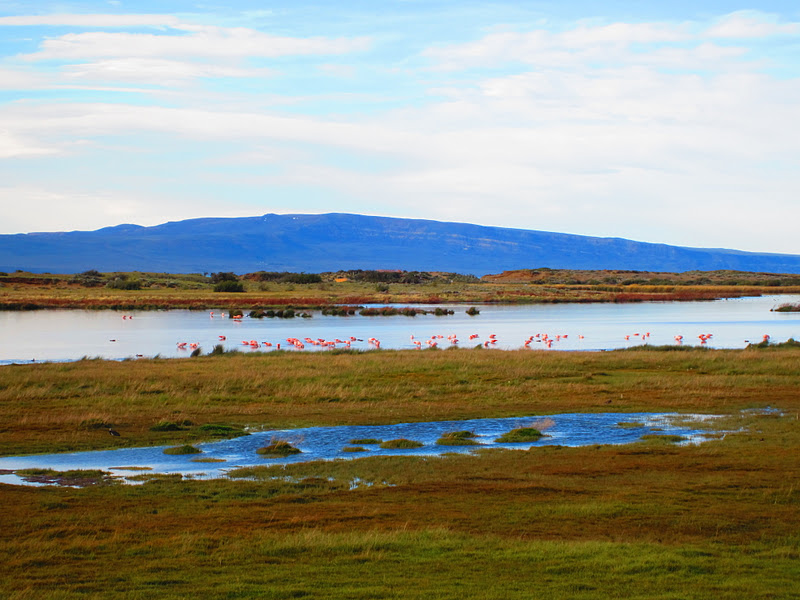
As if the glacier wasn't enough, when I got back from the glacier to El Calafate, I walked to a lagoon just outside of the city and I saw wild flamingos.  Amazing.  Plan for tomorrow: ice climbing.  I can not wait :-)


03 November 2011

Buenos Aires to El Calafate, Argentina: To the End of the World

This morning, Thomas and I had one last empanada and coffee in Palermo, our local neighborhood in Buenos Aires, before I had to head to the airport.

The view of Buenos Aires from the air was pretty great, but if I had to choose...


...I think I'd rather have this one!  The view of the mountains, the lake from the glacier run-off, and the clouds as the plane came down into El Calafate was absolutely spectacular, and it made me remember how nice it is to see blue sky.


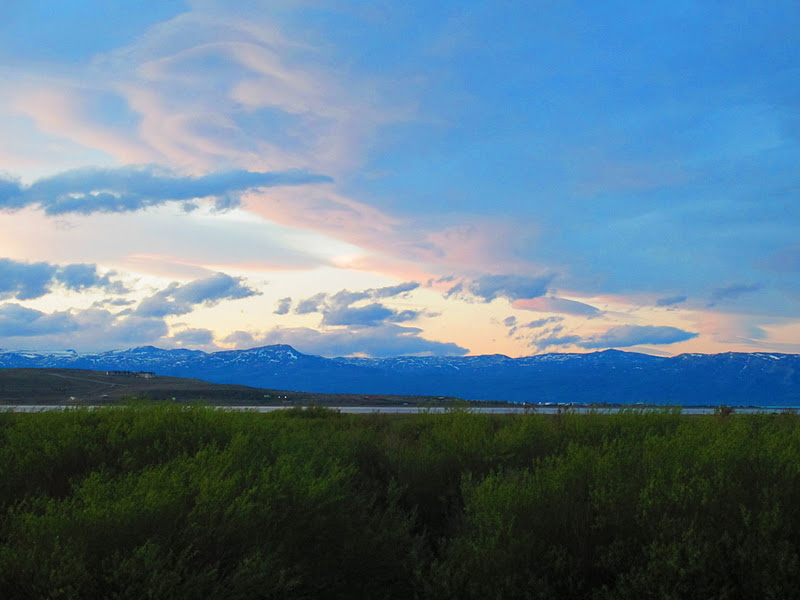
El Calafate, which is in the region known as Patagonia, is situated on the shores of a giant lake, and I walked down to the edge to get a better view of the mountains (you can see them in the background above) at sunset.  Not bad!

Another shot as sun was almost down.  Plan for tomorrow: climb a glacier.

Buenos Aires, Argentina: The Rest of the City and Tango

On Wednesday, Thomas (a hostel friend of mine) and I explored the three remaining neighborhoods that I had not yet fully seen.  The first stop was the Centro, which is anchored around the Casa Rosada (literally 'Pink House').  This house is the seat of the executive government and offices of the President of Argentina, in addition to being the location from which Madonna belted out 'Don't Cry for Me, Argentina'.  Impressive in the day, it is stunning at night, when it is lit with bright pink lights (unfortunately, I didn't have my camera at night).

The next stop was the San Telmo neighborhood, which is known for being a European-feeling artsy district.  Though this picture doesn't capture it very well, it did live up to this reputation, and we even caught some street tango while munching on pastries in one of the parks.

On the walk back from San Telmo to Centro, we found several churches, such as the one above, which is probably why Buenos Aires has 'The Seven Churches Tour'.  We didn't actually go in any of them except the cathedral, which is pictured below.

As per usual, the cathedral, built in pieces between the sixteenth and eighteenth centuries, was big, beautiful, and opulent.  It also houses the remains of General Jose San Martin, who was a prime leader in the South American struggle for independence from Spain in the early 1800s.

Our final neighborhood the day was La Boca, which is the outermost neighborhood at one end of Buenos Aires.  While beautifully colorful, with lots of street artists, local cafes, and tango dancers, this was a quick stop, as the area in which it is safe to wander is only about two square blocks (it is strongly encouraged to avoid the rest of the neighborhood in the interest of safety).  After our wanderings around La Boca, we took a one hour bus ride across the city to get back to our hostel...and then Thomas and I decided to go to a tango show!  Unfortunately, I forgot my camera--it turned about you couldn't take pictures during the show anyway, so I guess it wasn't a big deal--but the dancing was literally the best I have ever seen in real life, the accompanying dinner was wonderful (I now know why Argentina is so famous for their steaks!), and it was all in all a great way to bid adios to Buenos Aires!

02 November 2011

Buenos Aires, Argentina: Evita y Tigre

Yesterday, Anna and I began our day with an absolutely delicious breakfast loaded with fresh fruit in the center of Buenos Aires.  Delicious!

After breakfast, we visited the Evita museum, which is housed in one of the social aid houses that Eva Peron founded.  The museum tells her life story, from her humble beginnings in a poor Argentinian town to her rise to influence as the president's wife to her early death at the age of 33.  The focus is, obviously, the great works and laws she instituted for the poor, women, and elderly, but all displays some artifacts from her life, such as these dresses.

The building itself isn't half-bad either, with some really well-appointed rooms, such as this receiving salon decorated with azulejo tiles.

After Evita, Anna and I caught the shadiest train ever (we were literally sitting on the floor of a storage car for an hour) to Tigre, a suburb on the outskirts of Buenos Aires.  Tigre is on the Rio Tigre, and was originally a vacation spot for the rich of Buenos Aires.  Since then, it has morphed into a sort of day-trippers' magnet, with an amusement park, casino, boat cruises, and tons of little cafes and restaurants.

One of Tigre's more impressive mansions on the river.

Though there was nothing extraordinarily special about Tigre, it was nice to be on the water for the afternoon, to get out of the city a bit, and to see where the Argentines go to get away.  After getting back to the city (on a slightly-less-shady train), we went out to an amazing steak dinner at this hole-in-the-wall joint in the neighborhood where our hostel is located.  It was the kind of place where ten of us showed up, and instead of making us wait, the just set up some folding tables on the sidewalk outside the restaurant.  The food was great, though!

Buenos Aires, Argentina: An Intro to the City

Firstly, I have found that Buenos Aires, like all of the Chilean cities I visited and the entire country of Spain, operates on a sort of reverse-day schedule--meaning the typical hours to be awake are 12pm to 5am, rather than the reverse.  This schedule resulted in an interruption of my typical blog-writing schedule, so to those of you how actually read this daily, I apologize.  Anyhow...on Monday, my first day in Buenos Aires, Anna and I began by exploring the cemetery.  It seems a bit strange, but it really is like an art museum.  Only the richest of the rich in Buenos Aires are buried there, so all the mausoleums (through whose doors you can actually see the coffins) are really beautiful.  There are, however, some houses that are no longer taken care of, either because the family died out or they stopped paying taxes or whatever.  In these mausoleums, the glass in the doors is broken, the ceilings are open to the environment, and you are about two feet away from a 100-year-old coffin.  Pretty creepy!

Perhaps the most famous grave in the cemetery (though a bit hard to find, as it is part of a family plot and has no obvious signage) is that of Eva Peron, wife of Argentinian president Juan Peron, actress, advocate for the poor, social work dynamo, martyr for the people due to her untimely death at age 33, and inspiration for the musical 'Evita'.  I was lucky to get this picture with no people, as this spot was the focus for hoards of tourists.

After the cemetery, Anna (my hostel friend from California) and I strolled through some of the parks in Recoleta, one of the city's nicer neighborhoods.

We then had a traditional Argentine lunch in the center, after which we took a two-hour walk through the Puerto Madero and Palermo neighborhoods. 

Monday evening, we went to a live drum show in an abandoned warehouse.  Though you did have to pay to get in, there were hardly any tourists, and it had the definite vibe of being a totally underground event.  In addition, the music was really good, and you could tell the people up there really loved what they were doing--it was well-worth the $7USD entrance fee!

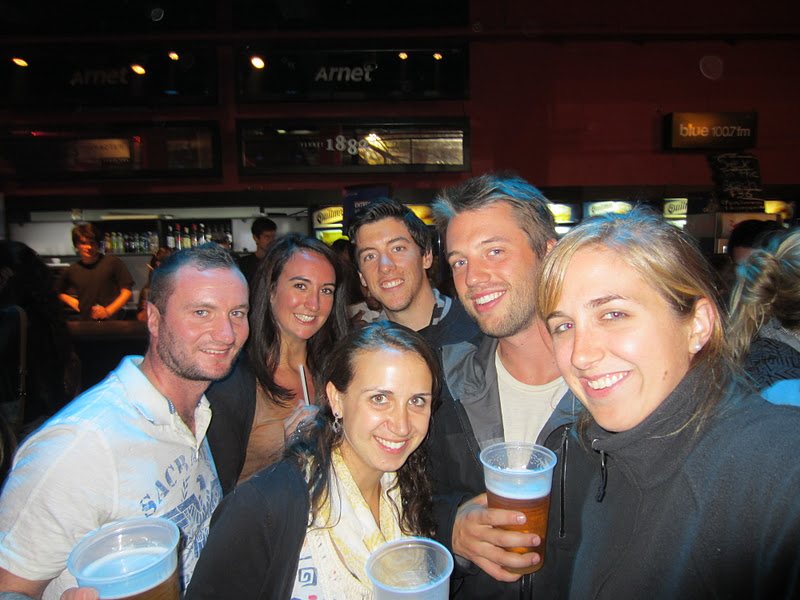
Some beers with hostel friends (from England, Australia, Seattle, and Palo Alto) finished off a great first day in Argentina!